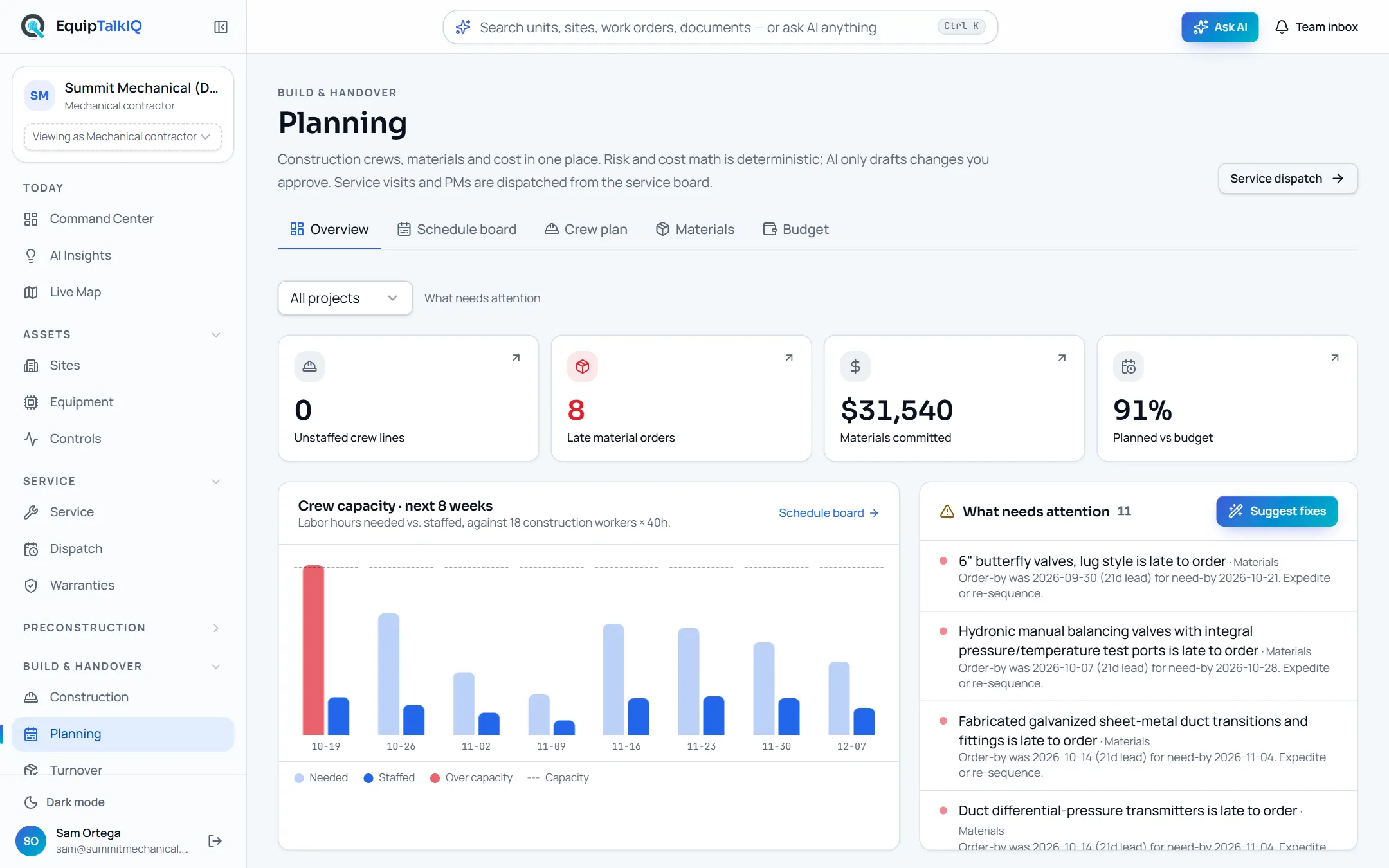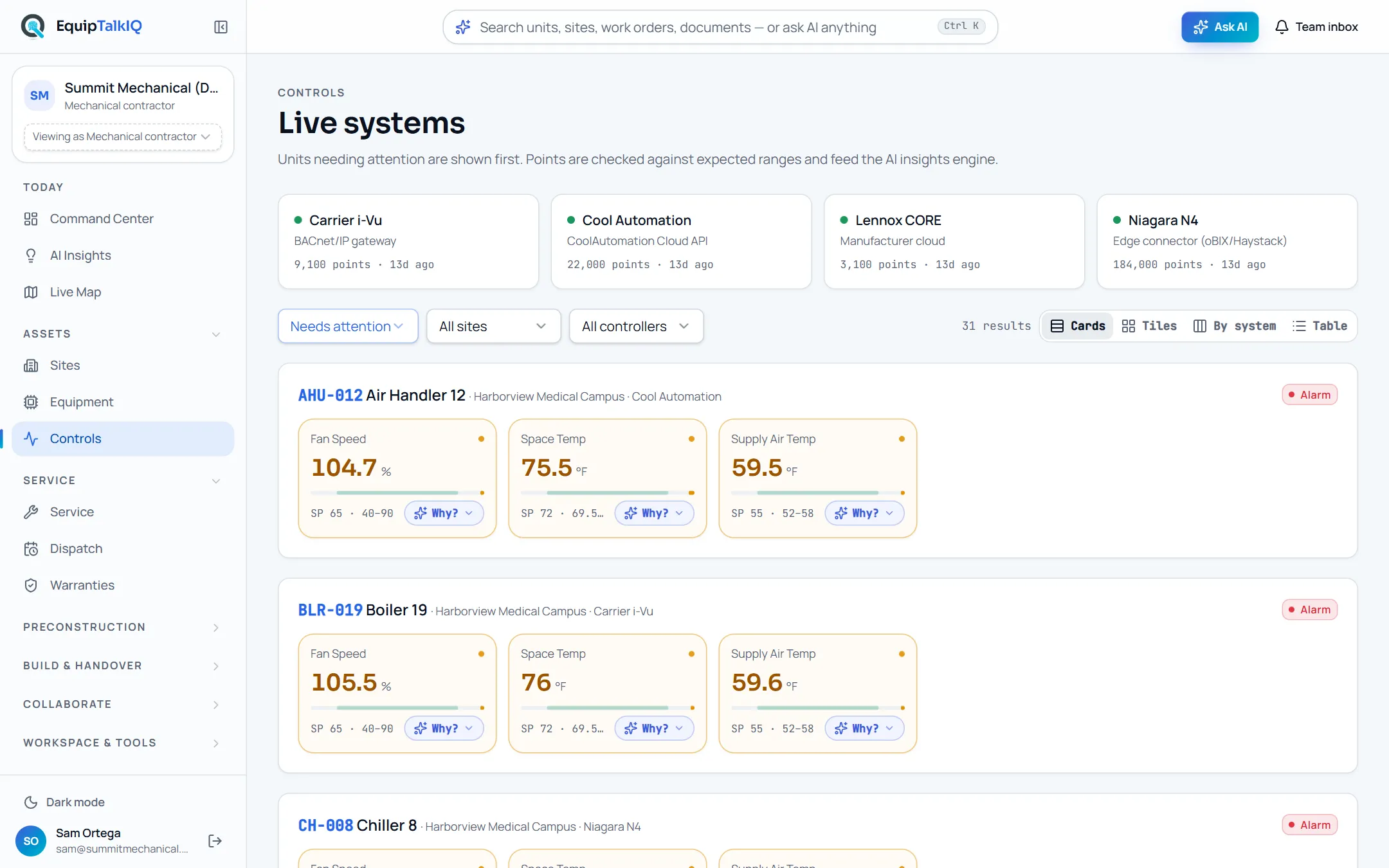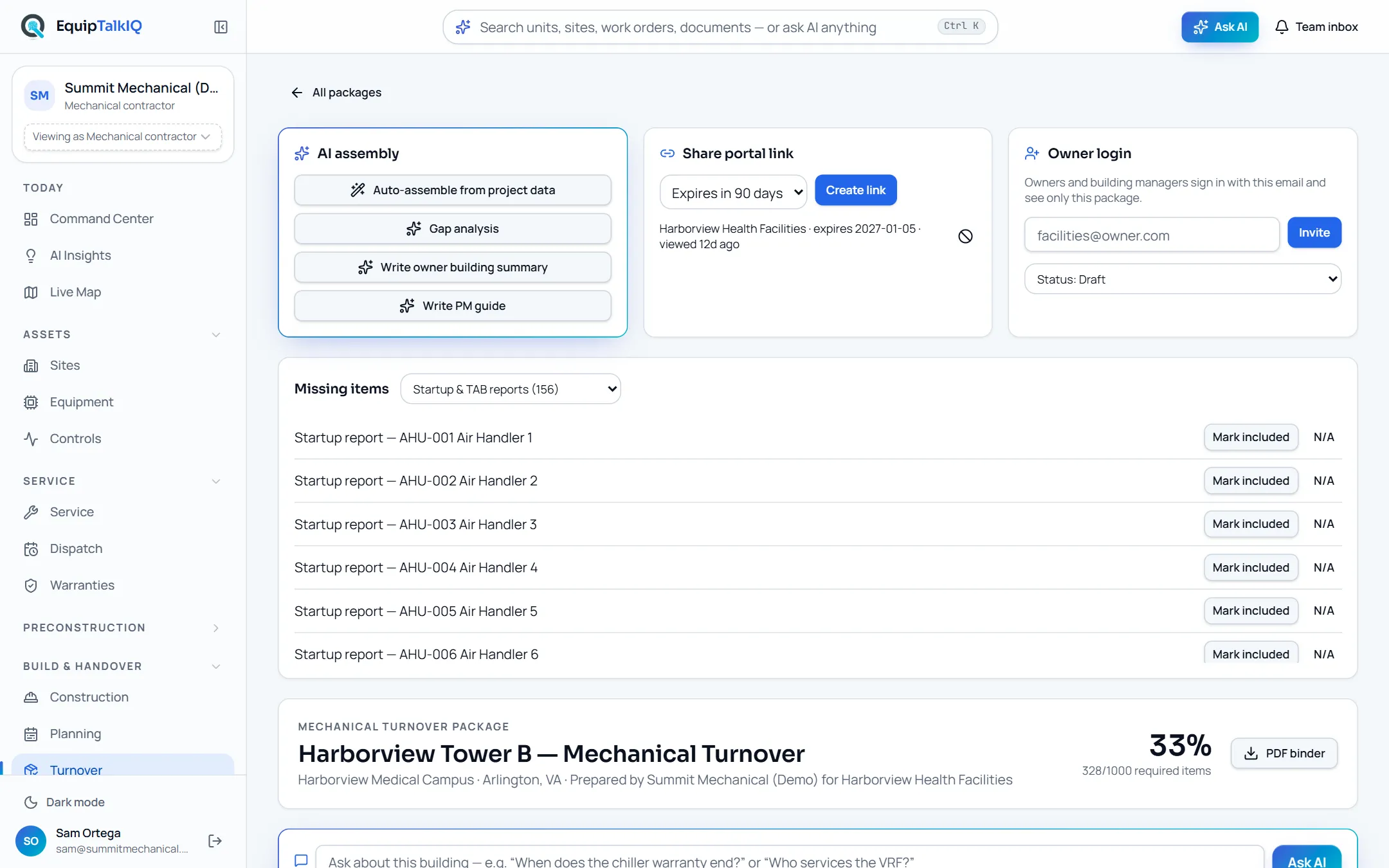
A submittal is a review chain.
A product cutsheet is only one part of a complete package. Wiring diagrams, warranty information, schedules, controls details, and project-specific evidence may all matter. A rep library makes supporting documents reusable; a collaborative builder lets the package take shape around a particular project and specification.
The intended approval chain is rep to contractor to engineer or architect. AI helps check the submitted evidence against indexed specs. It does not issue engineering approval. Missing evidence and conflicting requirements need to remain visible to the human reviewer.
The right information.
The right boundary.
Only this company’s accessible records.
Editorial sample. This switch does not change real permissions or call AI.
Show what the audience needs to decide.
An owner can need manuals, warranties, maintenance information, and building-specific answers without needing internal margins or referral commissions. A general contractor can need RFIs, submittals, change orders, and turnover status without needing technician pay rates. Those differences are functional boundaries, not merely different menu labels.
The audience switcher below uses entirely fabricated editorial records. It illustrates the intended separation. Real access is checked by the application; changing the demo view alone does not change your actual account privileges.
- Owner: building context, coverage, and maintenance.
- GC: project coordination and intentionally shared deliverables.
- Rep: product evidence, collaboration, and submittal preparation.
AI needs the same firewall as the interface.
A page may hide an internal number while an AI assistant still receives it in a prompt. That would defeat the boundary. Account isolation needs to constrain retrieval and answer generation as well as visible records.
Scoped assistants should answer from the audience’s own available context. When more information is needed, the appropriate response is an intentional request or share—not a silent search across somebody else’s private records.
Share the work intentionally. Do not confuse a common project with a common permission level.
See the EquipTalkIQ platform