Start with who is asking, not just what they typed.
A question such as “What does this project require?” sounds simple. Before interpreting the words, the application needs to know which project, which company, and which account is allowed to see it. Without that context, an impressive answer can be the wrong answer for the wrong person.
EquipTalkIQ separates contractor conversations from the scoped experiences used by owners, reps, and general contractors. An equipment conversation also carries the selected equipment context. These boundaries limit the information that can become evidence for an answer. The animated example is an editorial model of that process, not a production request trace.
Retrieve the useful evidence—not the whole filing system.
A site can contain hundreds of pieces of equipment and thousands of documents. Sending the entire site to an AI model for every question would make relevance, speed, and access harder to manage. Instead, the assistant starts with compact context and retrieves a capped set of records appropriate to the question.
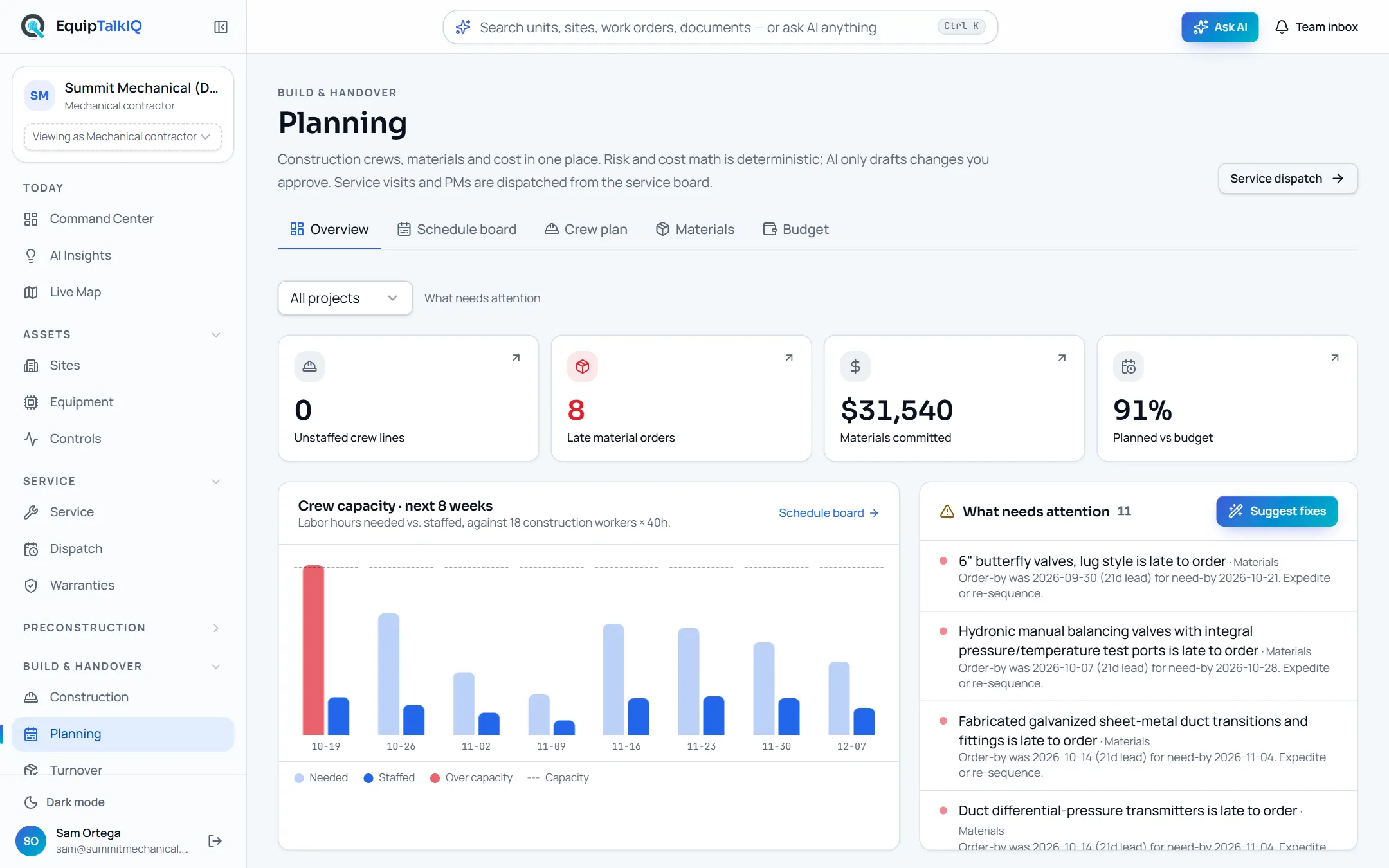
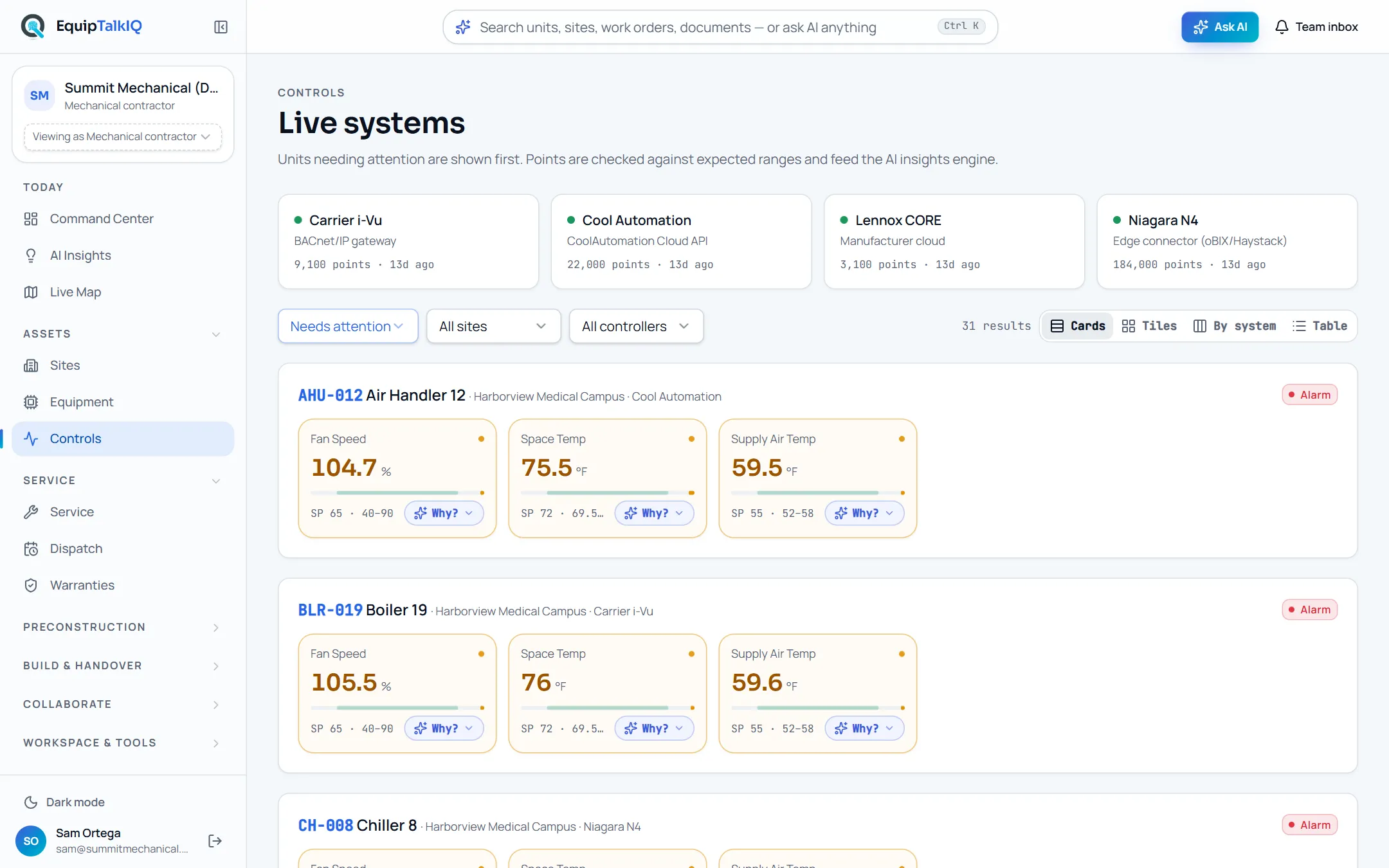
A preventive-maintenance question may need agreement coverage and upcoming work. A project requirement may need a relevant spec section. A supply-air finding may need equipment details, recent service, and point context. These are different retrieval tasks even if they refer to the same building.
- Preserve the selected site or asset scope.
- Retrieve a limited set of relevant records.
- Distinguish supplied facts from recommendations and missing evidence.
Begin inside the right boundary.
Identify the account audience and the company, project, site, or equipment it can access.
Sources make a response reviewable.
SpecLens can connect project-spec answers to section and page references. Those references give a reviewer somewhere to go when an answer matters. A citation is not a substitute for judgment: the underlying document may be superseded, the requirement may depend on another section, or the selected product may lack supporting evidence.
A review should say when compliance is shown, when it is not shown, and what supporting information remains necessary. The difference matters. “Not shown” is a request for evidence; it is not automatically a finding of noncompliance.
The answer is a beginning, not an endpoint.
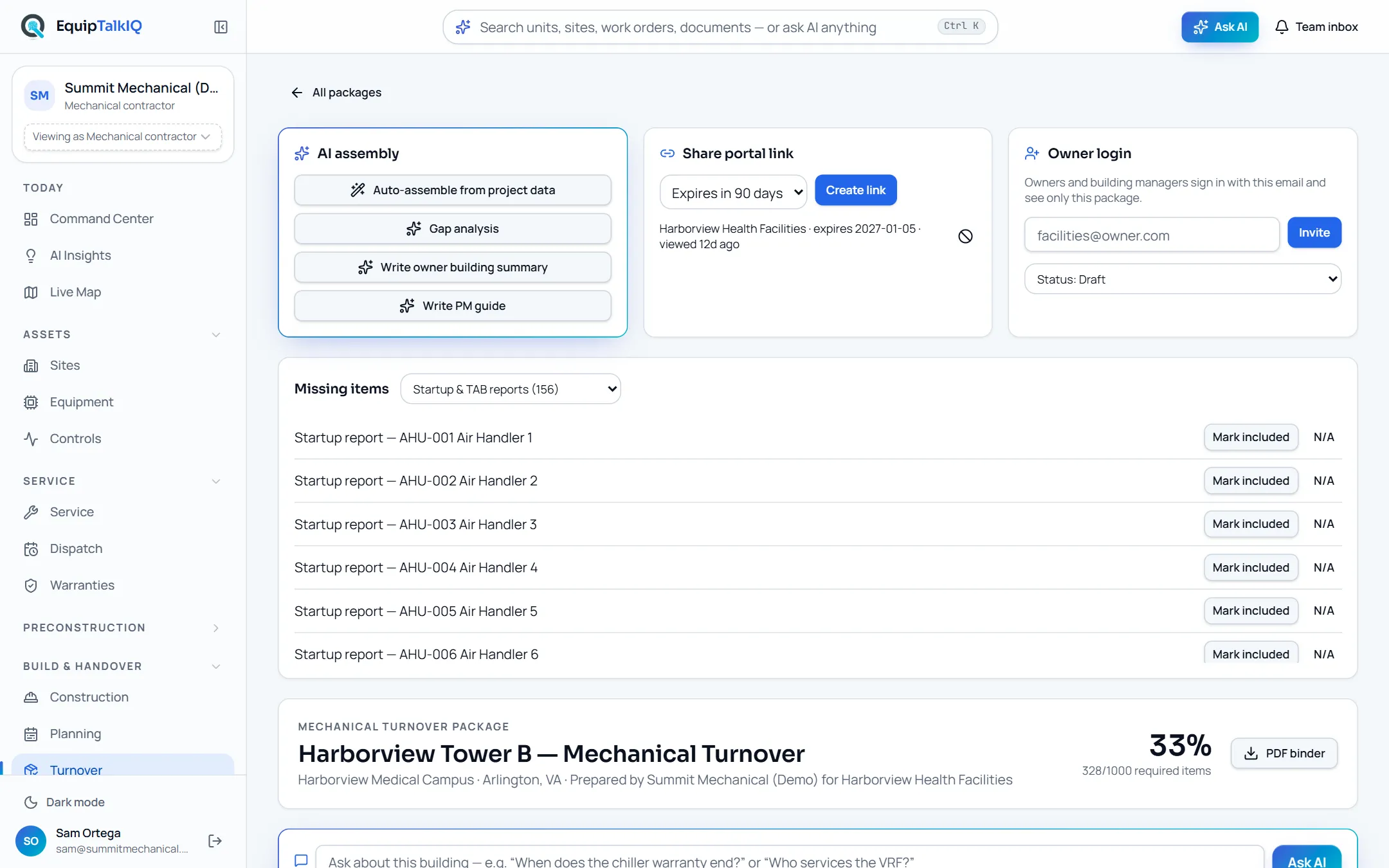
A good response can become a shared snapshot, a follow-up question, or an assigned task. Keeping the record and conversation together prevents a useful finding from turning into another disconnected message. The receiver should be able to understand the context before deciding what to do.
External email and messaging delivery remain dependent on sender setup and scoped connections. In-app collaboration is the place to explore the workflow today. The goal is deliberate movement of information—not an autonomous agent broadcasting findings without review.
Retrieval should be narrow enough to respect access and rich enough to support the question.
See the EquipTalkIQ platform