A convincing plan is not necessarily a feasible one.
AI can organize a messy scope into labor, materials, and preventive-maintenance suggestions. That makes it useful at the start of planning. It does not establish that a technician is available, that a delivery arrives on time, or that two assignments do not overlap.
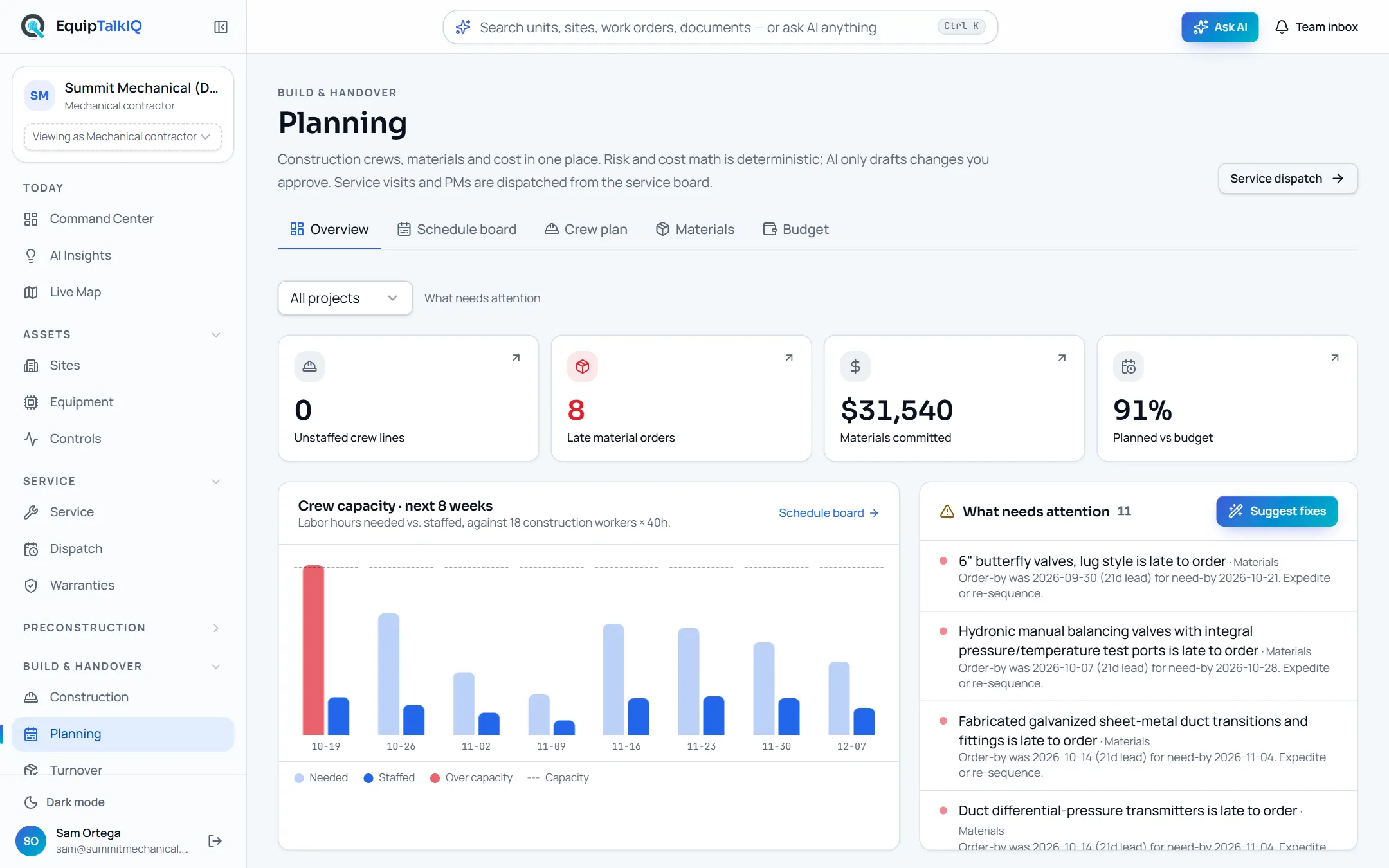
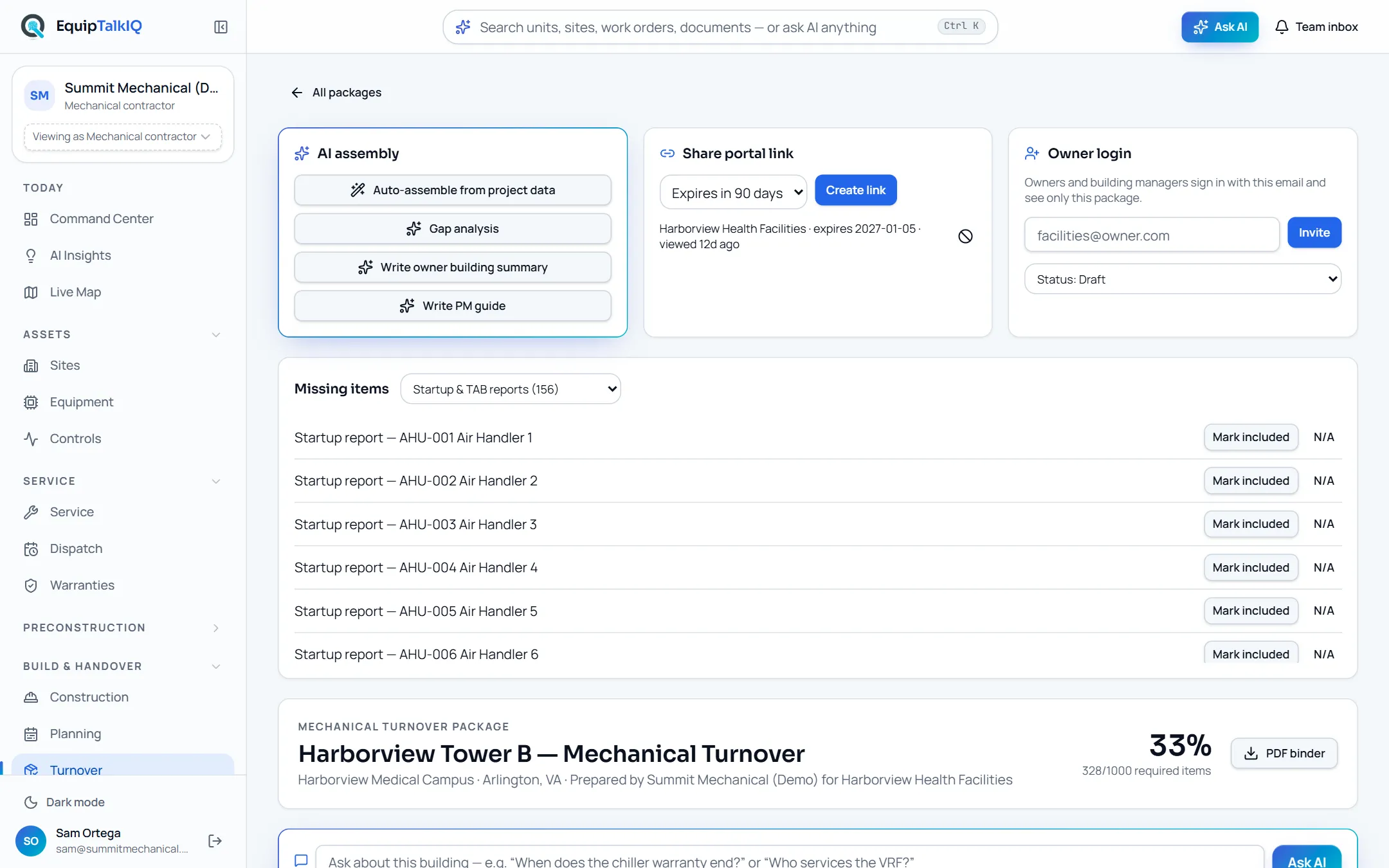
EquipTalkIQ separates draft suggestions from accepted plans. Its planning views organize schedule, labor, materials, PM, budget, and risks. Changes remain editable, and AI-generated fixes require a user to accept them.
Use explicit checks for explicit problems.
Double-bookings, unstaffed work, overload, and material timing are not matters of writing style. They can be checked against known plan inputs. Deterministic checks make those constraints visible even when a draft sounds polished.
The capacity example below is deliberately simple: compare sample demand hours with sample available hours. It is an editorial model, not the application’s full scheduling calculation, labor budget, or dispatch recommendation. Its value is in making the mismatch visible.
- Check labor against availability.
- Review material need dates against planned arrivals.
- Keep suggested fixes separate from accepted changes.
Review demand or add available capacity before accepting the plan.
Illustrative demand minus capacity, not a project forecast. The real planning workspace also checks assignment conflicts, staffing, and material timing.
Portfolio context and field context have different jobs.
A service manager needs to compare commitments across sites. A technician needs the next assignment and its equipment context. A construction manager needs crew capacity and material readiness. A single view cannot make every decision equally clear.
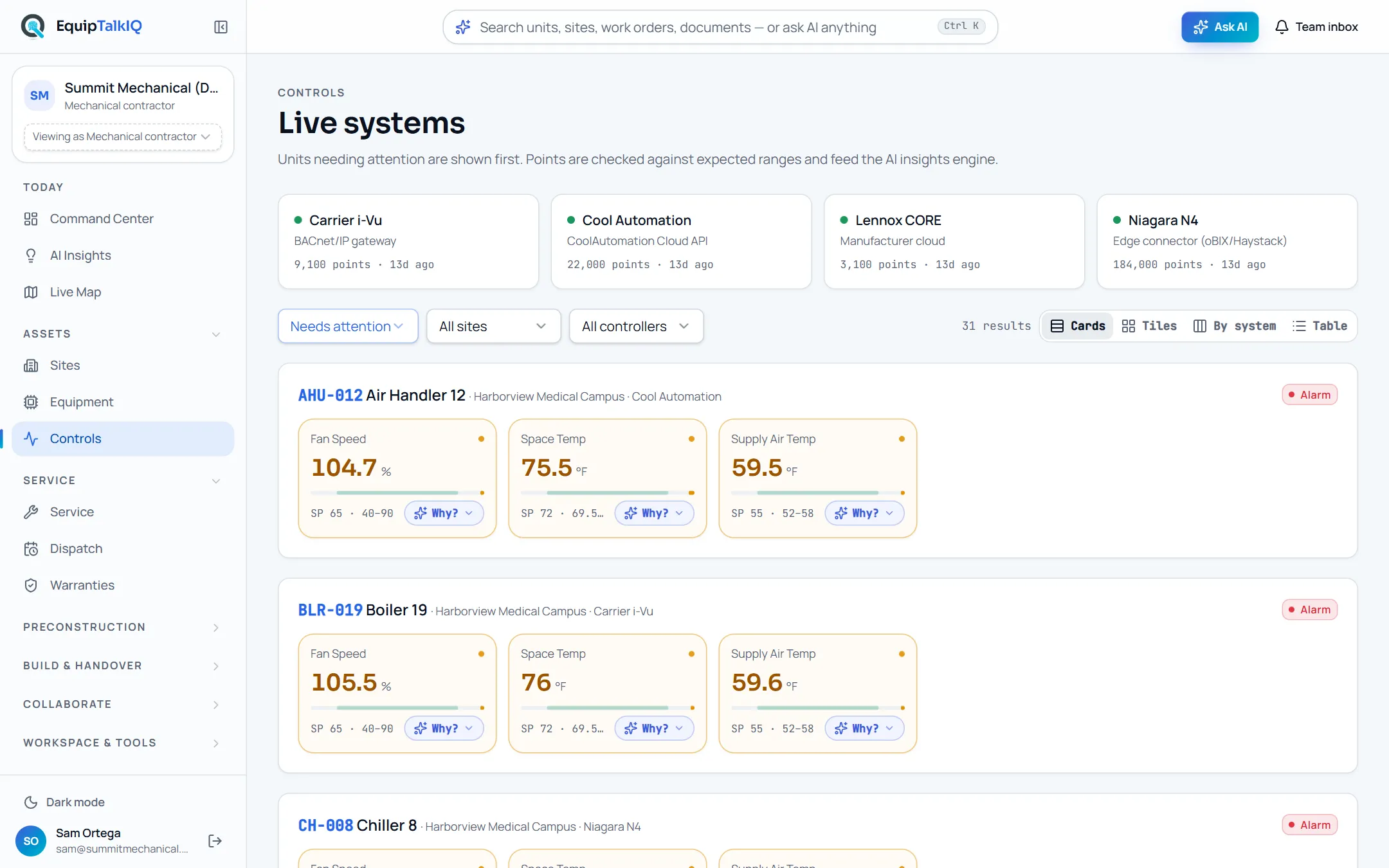
Command Center focus and site or equipment scope help people narrow the operating picture. The field map uses sample worker locations until source feeds are connected. Its current movement is simulated and should not be treated as real dispatch information.
Accepting a suggestion should be a visible act.
A proposed change can redistribute work or surface a conflict. It should not silently alter an approved plan because an assistant generated text. The reviewer needs to see the suggestion, understand the effect, and choose whether to apply it.
After approval, keep the plan editable and the follow-up attached to the team’s work. That is how AI becomes an assistant to planning instead of a second, invisible planning authority.
Let AI propose. Let explicit constraints challenge. Let people approve.
See the EquipTalkIQ platform